What’s the first horse keeping practice that benefits the overall health of your equine companion?
Imagine that you’ve just walked out to your barn or you’ve arrived at your boarding facility excited to spend time with your horse. She whinnies for you and as you approach her stall she tries so hard to stick her cute nose through the bars to greet you.
As you pull her out of the stall, she steps out somewhat stiff as she usually does. You don’t think anything of it because you’re use to this and you may even think it’s normal.
As equine caregivers, we often wonder if what we’re doing for our equine companions is in their best interest.
Could it be possible that your horse keeping is inferior and your equine partner is trying to tell you something? What your horse is probably trying to tell you is that you’re breaking the first rule of natural horse care.
Inferior Horse Keeping
Most equine caregivers would love to optimize their horse keeping practices, but first it’s important to be aware of the warning signs that point to inferior equine care.
So, here are 7 warning signs to cause you to rethink your horse keeping strategies and create a positive shift in mindset.
These 7 warning signs are all a side effect of one single ingredient that is missing from most equine care programs.
Movement.
Along with movement comes increased circulation throughout the body.
Stalled horses can’t move enough to keep adequate circulation. Add on top of that a horse being shod and we have further significantly decreased circulation.
What does this mean to you?
You have created a horse who…
- Gets stiff
- Has poor hoof quality
- Requires more frequent hoof care = increased hoof care bills
- Has muscles and ligaments that lose tone
- Has increased probability of injury
- Is more prone to illness and increased vet bills
- Has increased displaced behavior (i.e. cribbing, weaving, aggression, etc.)
Think the opposite of what you think is “Normal”
I’ve come to realize over the years that most of the lessons I teach have a lot to do with a mind shift. That mind shift usually requires you to THINK THE OPPOSITE of what you think is normal by domestic equine standards.
So what’s the opposite of my 7 warning signs list above?
A horse who is allowed to move constantly through the day AND night will by default …
- Minimize or eliminate stiffness (especially in barefoot horses)
- Have increased hoof quality (in barefoot horses)
- Require very little trimming (in barefoot horses) = decreased hoof care bills
- Have muscle and ligaments that are toned and well developed
- Have decreased incidences of injury
- Be less prone to illness and have minimal vet bills
- Create a more physically, mentally and emotionally balanced equine companion where displaced behavior doesn’t exist
Again, the common denominator of inferior and optimal equine care is movement.
So, does any of this sound like you and your horse?
Keep it soulful,
Stephanie Krahl
###
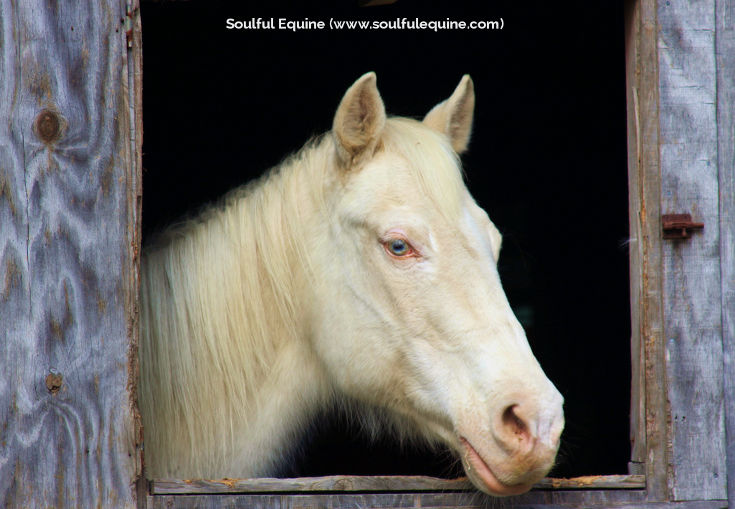
Photo Credit – original photo modified in size and to include the Soulful Equine name and URL
Natural Horse Care Coaching
If you need help understanding more about natural horse care or natural boarding, check out our consulting and coaching services.